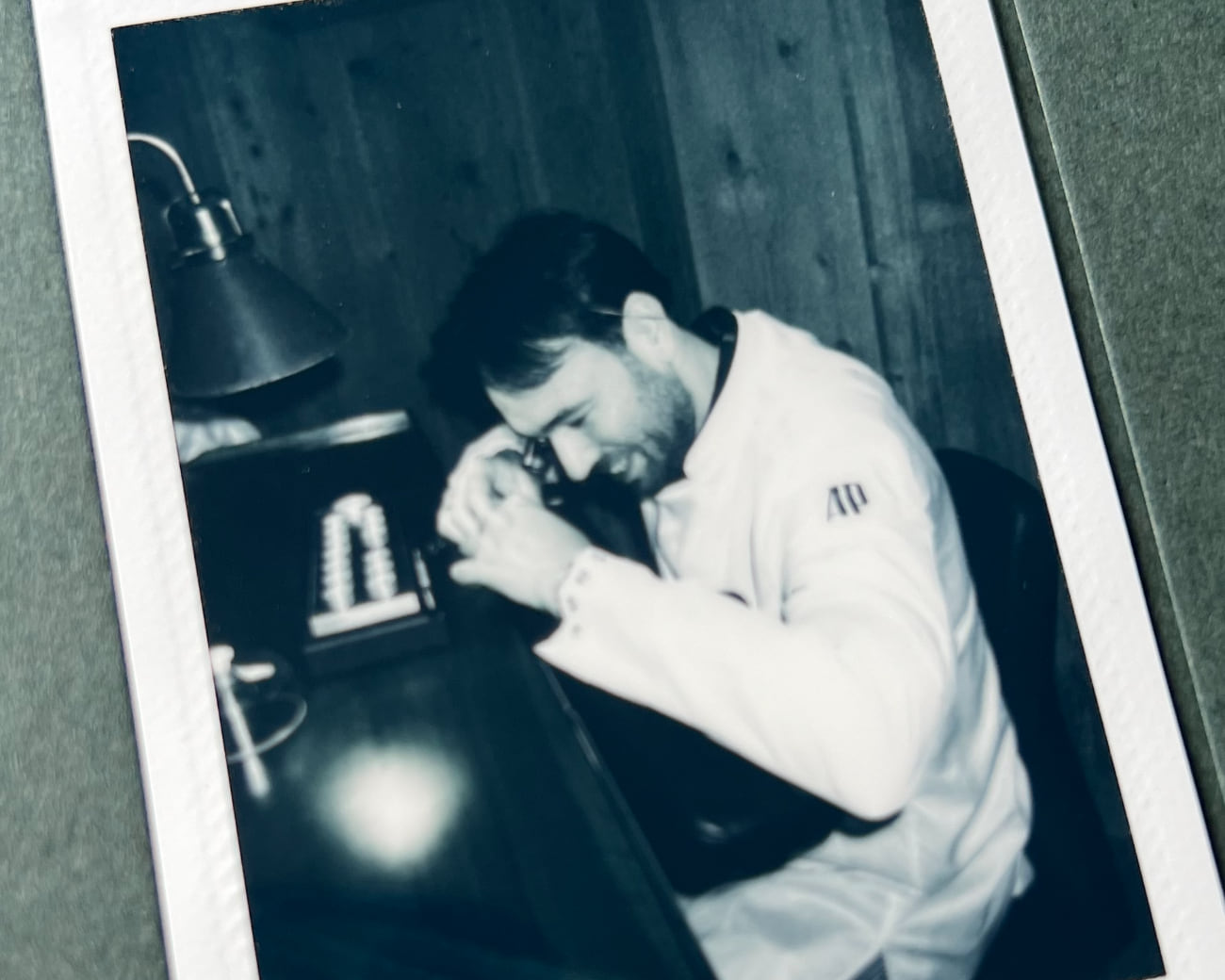
I started buying watches for the money. Then I opened one.
That was the early 2010s, and I was a student somewhere the interesting things never turned up on their own. What began as a way to earn a little has been the thing I have paid most attention to ever since.
It started as commerce and I see no reason to dress that up. I was living in a small city in Russia where you could not simply go out and buy the watch you wanted, so I learned to find them abroad, get them home, and hand them over to the people who had asked. The margin was the point. For a couple of years that was the whole of it.
What changed it was a watch I never bought. My great-grandfather's Vostok — one of the commemorative pieces made to mark the war — reached me having stopped, and I decided I would be the one to put it right. I opened it at a kitchen table with the wrong tools and far too much confidence, and I broke it. That is the accurate word. Working out exactly what I had ruined took me years, and somewhere in those years being sorry turned into being interested.
Since then I have looked at the movement before the dial, and that is why what you find here leans so heavily one way: mostly dress watches, mostly plain three-handers, chosen for what is happening under the caseback rather than for a name that carries a premium. I photograph each one as it is, wear and all, and I write down what is wrong with it. Where a watch has needed work I have done it myself, at my own bench, so there is no third-party invoice to hand you: what there is instead is the rate and amplitude in the listing, and the timing machine reading behind them if you ask for it.
I keep the collection at home and I am happy to put four or five on the table with coffee. Weekday afternoons suit best.